


Ask any writing teacher about "show, don't tell" and watch us struggle to explain it without clichés. After decades of explaining the concept while students and clients gazed blankly at me, I have found the perfect teaching tool in the most unlikely place: the obituary section.
To some writers, the idea seems intuitive—a natural inclination to show rather than tell. To others, it's a struggle to discipline their words and control the structure of a story. I can show you the definitive answer now.
In a Great Courses lecture, I heard an obituary, of all things, so poignant that I couldn't stop listening, and later was inspired to spend an hour or more digging up background on the internet. That's what perfect writing can do—make us think and want more.
So, I ask you to read the first sample, an excerpt from an anonymous obituary published in The Economist. Then compare it to the more typical parallel sample I found in the New York Times.
When you've finished, I'll wager you can tell me why showing (painting a word picture for readers) is light years better than telling (stating what happened). Skilled writing causes a visceral reaction in readers and leaves the writer firmly etched in their memories. Can't you practically feel the freezing water and see that kilt floating like a ballerina's skirt?
Obituary #1
Bill Millin (from The Economist, Aug. 2010)
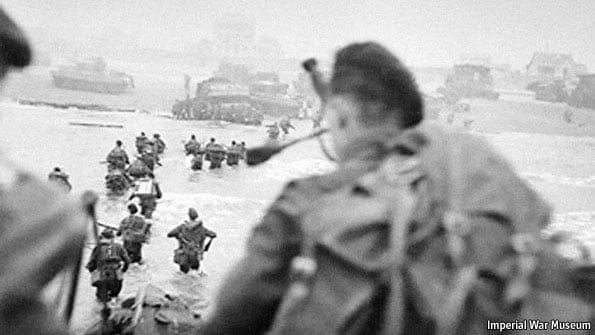
Any reasonable observer might have thought Bill Millin was unarmed as he jumped off the landing ramp at Sword Beach, in Normandy, on June 6th 1944. Unlike his colleagues, the pale 21-year-old held no rifle in his hands. Of course, in full Highland rig as he was, he had his trusty skean dhu, his little dirk, tucked in his right sock. But that was soon under three feet of water as he waded ashore, a weary soldier still smelling his own vomit from a night in a close boat on a choppy sea, and whose kilt in the freezing water was floating prettily round him like a ballerina's skirt.
From The New York Times, same date:
LONDON — Bill Millin, a Scottish bagpiper who played highland tunes as his fellow commandos landed on a Normandy beach on D-Day and lived to see his bravado immortalized in the 1962 film The Longest Day, died on Wednesday in a hospital in the western England county of Devon. He was 88.... Mr. Millin was a 21-year-old private in Britain's First Special Service Brigade when his unit landed on the strip of coast the Allies code-named Sword Beach.... Against orders from World War I that forbade playing bagpipes on the battlefield because of the high risk of attracting enemy fire, Lord Lovat, then 32, asked Private Millin to play on the beachhead to raise morale.
Now, writer, I encourage you to read both passages again, slowly, paying attention to your reactions, responses, and takeaways. Consider your writing. Would you prefer to paint pictures in vivid colors or simply describe events with bloodless facts?
The next time you're crafting a story—fiction or nonfiction—keep these differences at the front of your creative mind. Show, don't tell.

You can learn more strategies to perfect your writing income in my digital class Write-Earn-Repeat. Receive a FREE ebook just for exploring the course overview right here.

Yikes, this hits home. I am still grappling with drawing pictures instead of telling a story. I was on the beach in the first orbituary, but sat with my laptop at home reading the second. Quite effective comparisons on writing.
Brilliant example. I was disappointed when the first excerpt ended, wanting to know more.