


This is a real lesson section right out of my popular course Write-Earn-Repeat, which is now part of the Pen2Profit Academy membership. If you find this helpful, have a look at how you can get the rest of the material. This type of post is typical of what my paid subscribers find in their inbox every week. Today, I’m inviting all subscribers to experience the value.
Perfect isn’t all it’s cracked up to be.
You’re a writer. You’ve got the spark, that urge to wrestle words into submission—you’ve embraced the idea that imposter syndrome is a myth that you can banish from your process. But then, perfectionism shows up, like that overbearing neighbor who critiques your landscaping. And the neighbors echo the plateau of latent potential, perpetually whispering in your ear that you’ve peaked before you’ve even truly started.
Stop listening to that nonsense.
The “plateau of latent potential” (a.k.a. the most frustrating writing hurdle ever)
In Atomic Habits, James Clear describes the “plateau of latent potential” as the frustrating gap between effort and visible results. We get to a place where we’re working hard but feel mired in mud. There are good reasons for that, and it can be cured.
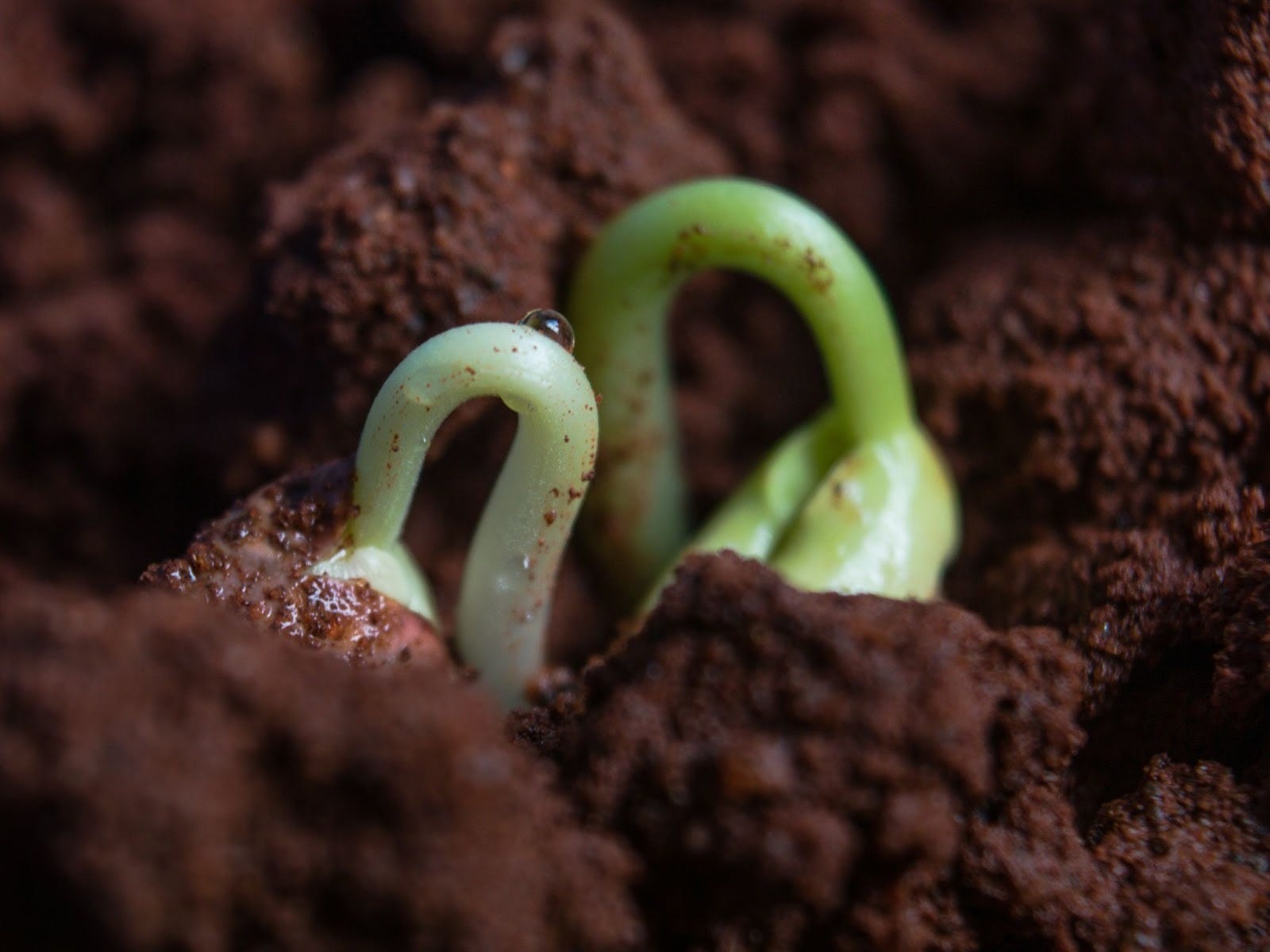
Progress is not linear—not ever. We expect hard work to lead to immediate results, but early growth is often invisible. Think about planting seeds. It takes a couple of weeks for that seed to germinate and send up a visible green shoot, because there’s a lag between action and outcome. Your effort accumulates. Like the seed that takes in water and nutrients, slowly expanding and growing, your payoff isn’t obvious yet.
Welcome to the “Valley of Disappointment.” Pssst. I’ll share a secret—an absolute truism. Most people quit a project—right before a breakthrough.
Writers are notorious for working like that. How many of us have 27 unfinished drafts—telling ourselves we’ll get back to them. Someday. Keep going, working steadily, being patient, and you’ll hit that moment when your budding project pokes through the soil and reaches for the sun.
Perfectionism is the sneaky liar holding you back
Be careful, though. Just as you’re pulling the rocks and weeds from the garden, perfectionism kicks in to tell you that what isn’t flawless is worthless. Your inner voice nags, “Revising the same sentence for three hours is productivity. You can’t move ahead with the story. Listen, Pal, if you’re not producing perfect work every minute, you’re a hack.”
Horse hockey.
Perfectionism is fear and insecurity in disguise. Perfectionism seduces you to stay in your comfort zone, avoid the risk of drafting something less than brilliant. But growth doesn’t happen in comfort zones.
Shake off the fear and let the story evolve organically. Write the draft. Read the draft. Revise. Embrace the “Shitty First Draft” as it will give rise to robust bouquets of flowering manuscripts.
Anne Lamott is a 70-year-old New York Times best selling author with 20 books in her backlist. She says it best—your first draft is meant to be a glorious mess. It’s a stepping stone, not a tombstone. Give yourself permission to write badly. You can’t edit a blank page.
Don’t should all over yourself
🚫 I should be writing a masterpiece.
🚫 I should be more productive.
🚫 I should be perfect.
Wrong. Replace those shoulds with coulds and want tos. Work consistently toward those goals, and adjust your thinking as needed. Writing should be a satisfying, rewarding process, not a punishment or a chore.
As writers, we can celebrate lots of small victories. Did you write 500 words today? Awesome. Did you finally hit “publish” on that blog post? Double awesome. Did you finish a long-avoided draft? Yay! Every word you write is a new bud on your healthy figurative rose bush. Don’t overlook that.
Suppose this particular day you missed the mark. It happens. Learn to fail gracefully knowing that failure isn’t proof you’re not good enough—it’s proof you’re growing. Every misstep teaches you something. Don’t let failure define you. Let it refine you.
“And now that you don’t have to be perfect, you can be good.”
—John Steinbeck
Your latent potential is waiting—go write something
That plateau won’t last forever, and neither will the crushing weight of perfectionism—unless you let them. Your readers don’t want a robotic, airbrushed imitation of someone else. They want your voice with its distinct ticks, quirks, and character.
Activity: Write 100 imperfect words right now. Or perfect words. Just get them down. No overthinking. No self-editing. Just words. Go.
Suggested readings—because good writing comes from good reading
📖 Bird by Bird by Anne Lamott–for a reminder that first drafts are supposed to be messy. (If you haven’t read this, you must!)
📖 The War of Art by Steven Pressfield—for a kick in the pants to overcome resistance.
📖 Big Magic by Elizabeth Gilbert—for a dose of creative inspiration.
📖 Atomic Habits by James Clear—for strategies to build lasting writing habits.

Ready to move from “writing into the void” to building a business? The Pen2Profit Academy is now open to new members. For $89 a year, you get immediate access to my flagship Write-Earn-Repeat course (a $250 value), my private weekly inner-circle mentorship, and our community of mature writers. Stop wrestling with your process and start focusing on your legacy.
100 imperfect words, eh? There are things I don't like about aging, but there are some tremendous upsides, chiefly, it's so wonderful to have a bit of realistic perspective on how things work, how growth happens, and the time and patience it requires. I was talking to a friend today about the vision I had for myself in 2010, figuring it would take me six months to achieve what ultimately took 16 years to see to fruition. The growth that feels satisfying is messy and slow, but when you grow that way you've eventually got an unshakable shade tree in your yard that will bear fruit for a long time. I wish I could have somehow communicated that truth to my younger self.
100% agree with this, great article. You reminded me of this quote, so thought I’d share
“I'm writing a first draft and reminding myself that I'm simply shoveling sand into a box so that later I can build castles.”
―Shannon Hale